


Did You Know That Your Core And Your Abs Are NOT Exactly The Same?
Understanding this distinction is key to building true functional strength and getting the most out of every workout.
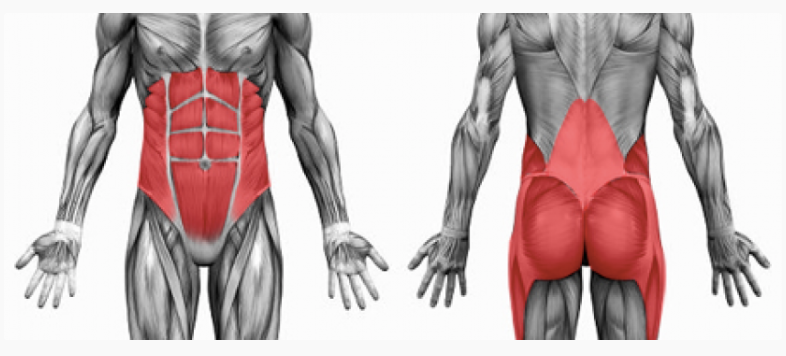
CORE MUSCLES
Your core is a whole system of different muscle groups that work together to help you stabilize and control just about all of your movements.
Think of your core as your body’s powerhouse—it’s not just one area, but an integrated network that includes:
- The pelvic girdle & hip muscles: pelvic floor, glutes, hip flexors, and more
- The abdominals: Rectus abdominis (six-pack muscle), internal obliques, external obliques, transverse abdominals, serratus anterior
- Back muscles: Including the erector spinae and multifidus that support your spine
Your core is what allows you to move with stability, transfer force efficiently, and protect your spine during both exercise and everyday activities.
ABDOMINAL MUSCLES
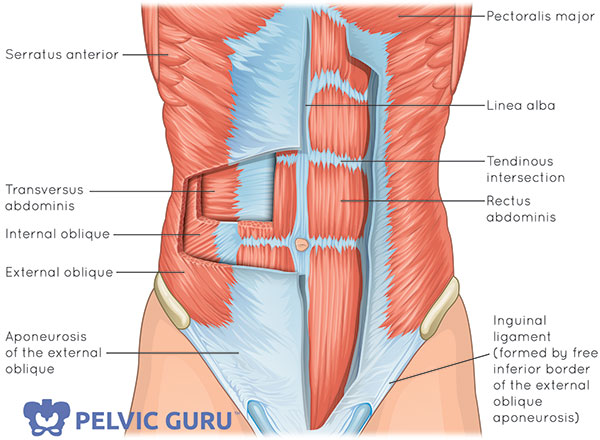
Your abs (abdominal muscles) are one specific muscle group that forms part of your larger core system.
There are exactly 5 muscles that make up the abdominals, and just like all our muscle groups, they’re layered—some much deeper than others.
Here’s what those layers look like (from outermost to deepest):
- Rectus Abdominis – The “six-pack” muscle that runs vertically down the front of your abdomen
- External Obliques – The outermost side muscles that help with rotation and side bending
- Internal Obliques – Sit beneath the external obliques and work with them for rotation and stability
- Transverse Abdominis – Your deepest abdominal layer, wrapping around your torso like a corset. This is your primary stabilizer and the foundation of core strength.
- Serratus Anterior – Often considered part of the shoulder complex but plays a role in core stability and connects to your obliques
Understanding these layers is crucial because true abdominal strength requires working all five layers, not just your six-pack.
WHY IS THIS IMPORTANT TO YOU?
Because if you want to build real abdominal strength, you need to work all 5 layers of your abs through a variety of movements, angles, and ranges of motion—not just endless crunches that target the outermost layer.
And if you want to build solid core strength, you need to engage all the muscle groups that form your core system so you can learn to properly stabilize and move from a strong, connected center.
Here’s why this matters in practice:
When instructors cue you to “engage your core,” we’re asking you to activate more than just your abs. We want you to also engage your pelvic floor and pelvic girdle muscles (glutes, hip flexors) to create full-body stability.
Understanding how to stabilize from your entire core makes your abdominal muscles work much more effectively—which is why in Pilates, we focus so heavily on principles like centering (alignment) and control.
Moving this way is essential for:
- Building true strength from the inside out
- Maintaining stability and preventing injury
- Creating a uniformly strong, toned body that serves you for life
This is also why you’ll hear so many detailed cues in my workouts. VB Method emphasizes form and technique while teaching you to work from a strong, integrated core. This approach doesn’t just sculpt your body, it teaches you to move with intention, power, and sustainability.
When you understand the difference between your core and your abs, you can train smarter and finally build the deep, functional strength that supports everything else you do.
xo,
Vilmaliz


Share Post